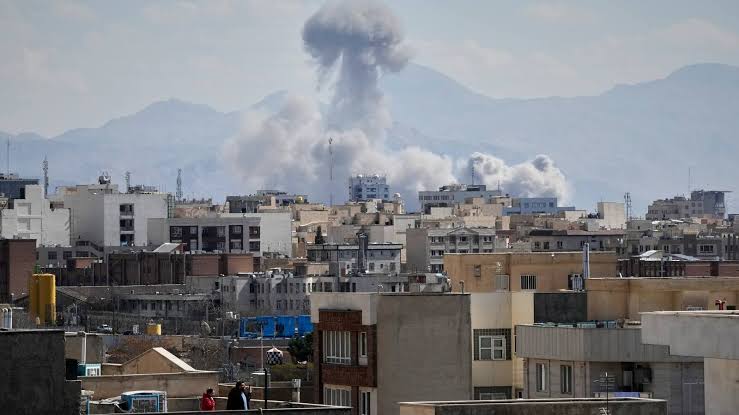
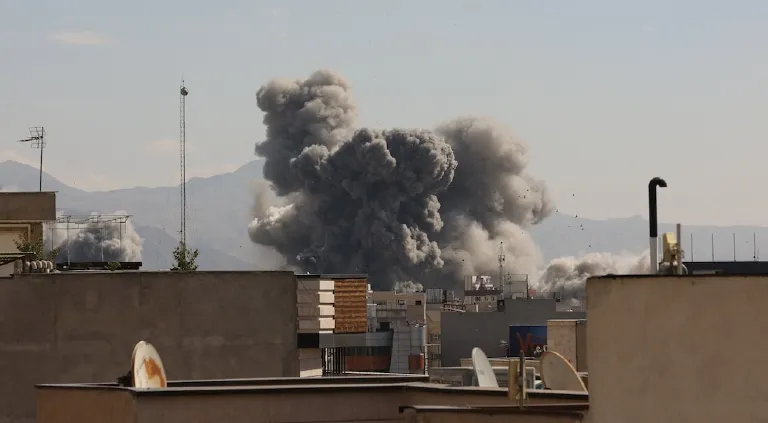
Intense fighting between U.S., Israeli and Iranian forces continued into Sunday as officials confirmed the death of Iran’s Supreme Leader Ayatollah Ali Khamenei and reported American military casualties linked to the opening phase of Operation Epic Fury.
Iranian state broadcaster IRIB announced that Ayatollah Ali Khamenei had “reached martyrdom” following coordinated airstrikes on Tehran.
The state-affiliated Mehr News Agency also confirmed his death and declared a 40-day period of national mourning.
Iranian Foreign Ministry officials had earlier declined to confirm the reports, but state television’s statement marked the first official acknowledgment from Tehran.
President Donald Trump announced Saturday that the United States had launched what he described as “major combat operations” in coordination with Israel.
U.S. Central Command, known as CENTCOM, said American forces struck more than 1,000 targets within the first 24 hours, including command centers, missile defense sites, Islamic Revolutionary Guard Corps facilities and naval assets.
CENTCOM confirmed that three U.S. service members were killed in action and five others were seriously wounded during the initial operations. According to U.S. officials, the fatalities occurred in Kuwait. The names of the deceased are being withheld pending notification of next of kin.
Israeli Prime Minister Benjamin Netanyahu said Israel was “striking the heart of Tehran with increasing strength.”
In a video message, Netanyahu stated that Israeli forces had eliminated dozens of senior Iranian officials in addition to Ayatollah Ali Khamenei.
Netanyahu met with Israel’s defense minister, the chief of staff of the Israel Defense Forces and the head of Mossad before continuing the campaign.
The Central Intelligence Agency had been tracking Ayatollah Ali Khamenei for months prior to the strike, according to sources familiar with U.S. intelligence assessments.
Those sources said the timing of the operation was adjusted after intelligence indicated senior Iranian leadership would be gathered.
President Donald Trump later claimed that nine Iranian naval vessels had been destroyed or sunk during the operation and that Iran’s naval headquarters sustained heavy damage.
CENTCOM separately confirmed that a Jamaran-class corvette had been struck and was sinking near Chah Bahar in the Gulf of Oman.
Iran retaliated with missile and drone strikes targeting Israel and regional U.S. facilities.
Israeli emergency services reported that nine people were killed and 49 injured in a missile barrage in the Beit Shemesh area of central Israel.
Rescue teams continue to search damaged buildings for possible survivors.
U.S. officials described the situation as fluid, with ongoing combat operations across multiple fronts.
The Department of Defense has not indicated how long the operation is expected to continue.
President Donald Trump said the strikes would strengthen the United States’ position in any potential diplomatic discussions, arguing that the military campaign had shifted regional power dynamics.
Israeli Prime Minister Benjamin Netanyahu said the joint action represented a decisive moment in Israel’s long-standing confrontation with Iranian leadership.
As regional tensions escalate, governments across the Middle East are on heightened alert amid concerns of broader conflict.
The coming days are expected to shape both Iran’s internal leadership transition and the international response to the unprecedented military escalation.