
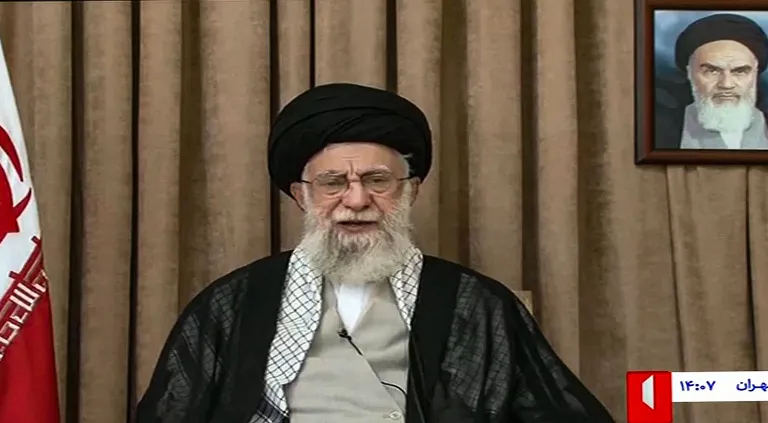
Global attention remained fixed on the Middle East Sunday after Iranian state media confirmed the death of Iran’s Supreme Leader, Ayatollah Ali Khamenei, following coordinated airstrikes carried out by the United States and Israel in Tehran.
President Donald Trump announced Saturday that U.S. forces had launched what he described as “major combat operations” targeting key military and government installations in Iran.
Israeli Prime Minister Benjamin Netanyahu said Israeli forces were “striking the heart of Tehran,” adding that senior figures within Iran’s military and political structure had been eliminated in the operation.
Iranian state broadcaster IRIB reported that Khamenei had “reached martyrdom,” while the state-affiliated Mehr News Agency described him as having sacrificed his life for the nation.
Iran declared 40 days of national mourning following the announcement.
The U.S. Central Command confirmed that Operation Epic Fury involved extensive use of air and naval assets in the opening phase.
CENTCOM said more than 1,000 targets were struck in the first 24 hours, including facilities linked to the Islamic Revolutionary Guard Corps, missile defense systems, naval infrastructure and command centers.
Three U.S. service members were killed and five seriously wounded during related operations in Kuwait, according to CENTCOM. Their names are being withheld pending notification of next of kin.
The CIA had reportedly been tracking Ayatollah Ali Khamenei’s movements for months before the strikes, according to U.S. officials familiar with the intelligence assessments.
Israeli intelligence agencies, including Mossad, were also said to have coordinated closely with U.S. counterparts in planning the operation.
In response, Iran launched missile and drone attacks targeting Israeli territory and locations in the Gulf region that host U.S. military installations.
Israeli emergency authorities reported casualties in central Israel following missile barrages. Rescue operations were ongoing in several affected areas.
Iran’s Deputy Foreign Minister Saeed Khatibzadeh said the killing of Khamenei crossed what he called “a very dangerous red line” and vowed retaliation.
He said Tehran had warned Gulf states that hosting U.S. military bases would make them potential targets. “We have no option but to respond,” Khatibzadeh said in an interview with CNN.
President Donald Trump said the strikes had strengthened the United States’ strategic position and suggested that leadership change in Iran could follow.
When asked who might assume power, Trump said he knew but declined to name anyone publicly.
Prime Minister Benjamin Netanyahu addressed the Israeli public, calling the operation a decisive step against what he described as a long-standing threat. He acknowledged civilian casualties from Iranian retaliation and expressed condolences to affected families.
International leaders urged restraint as fears of a wider regional conflict intensified.
Airspace disruptions were reported across parts of the Middle East, and energy markets reacted sharply to the escalation.
The situation remains volatile as military operations continue and diplomatic channels appear strained.
Analysts say the coming days will determine whether the confrontation expands further or shifts toward negotiations involving regional and global powers.
