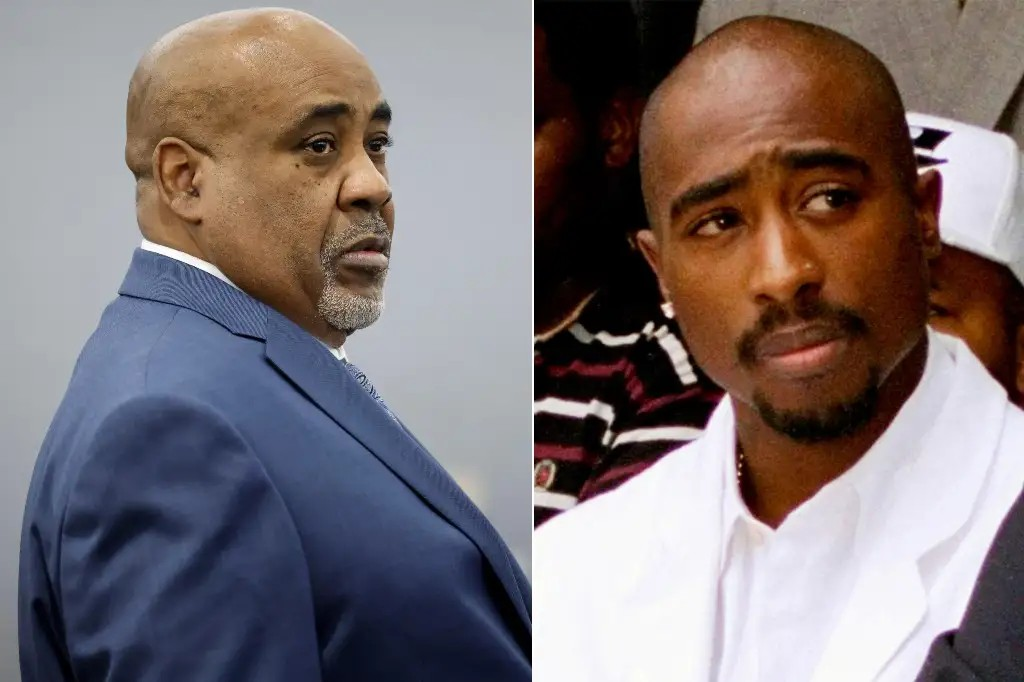
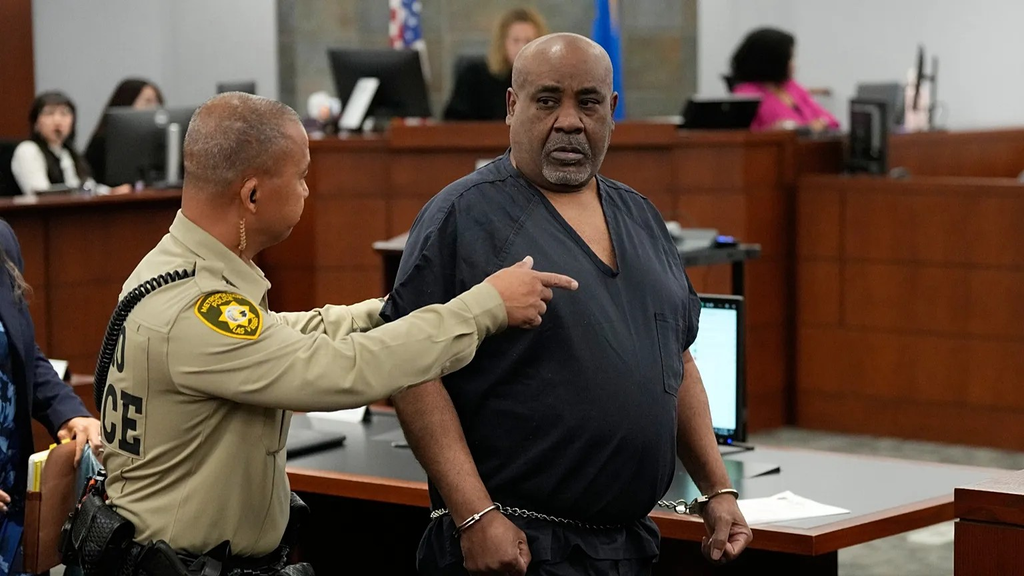
LAS VEGAS, Nevada — October 15, 2026. Nearly three decades after legendary rapper Tupac Amaru Shakur lost his life in Las Vegas, a Nevada judge has sentenced Duane “Keffe D” Davis, 63, to 40 years to l1fe in pr1son for orchestrating the 1996 sh00ting that ended the hip-hop icon’s life at just 25 years old.
The sentence was handed down on Tuesday, October 13, 2026, by Clark County District Court Judge Carli Lynn Kierny, following Davis’ conviction in August on a first-degree m***er charge involving a deadly weapon.
The courtroom proceedings were marked by emotional statements from Tupac’s sister, Sekyiwa “Set” Shakur, and his stepbrother, Maurice “Mopreme” Shakur, who described the lasting pain their family has experienced since the rapper’s passing.
Davis, a former leader of the South Side Compton Crips, maintained that he intends to challenge his conviction.
Judge Carli Kierny Hands Down the Sentence
During the October 13 hearing, Judge Carli Lynn Kierny imposed two consecutive sentences.
Davis received a minimum of 20 years for the first-degree m***er conviction, followed by another 20-year minimum term for the use of a deadly weapon.
Together, the penalties amount to a minimum of 40 years behind bars before he can become eligible for parole.
The court also credited Davis with 731 days already served.
The sentence does not guarantee his release after 40 years. It establishes the minimum period before parole consideration, subject to applicable law and credit calculations.
At 63 years old, Davis faces the possibility of spending the remainder of his life in custody.
Sekyiwa Shakur Speaks About Losing Her Brother
One of the most emotional moments of the sentencing hearing came when Tupac’s sister, Sekyiwa Shakur, addressed the court.
She described the profound impact her brother’s passing had on their family, explaining that the pain continued long after September 1996.
Sekyiwa remembered Tupac not simply as a world-famous recording artist but as a protective older brother who supported those closest to him.
She also spoke about the emotional challenges her family endured after losing him.
Her testimony reminded the courtroom that behind the music, fame and worldwide recognition was a young man whose relatives had expected to share many more years with him.
Maurice “Mopreme” Shakur Also Addresses the Court
Tupac’s stepbrother, Maurice “Mopreme” Shakur, also delivered a statement during the proceedings.
He reflected on the family milestones Tupac never experienced, including watching younger relatives grow older.
Maurice described how his brother’s absence affected generations of the family.
Both siblings asked the court to impose the strongest punishment available under the law.
Their statements emphasized that Tupac’s passing was not only a loss for music but also a deeply personal loss for those who knew him as a son, brother and family member.
Tupac Was Only 25 When He Lost His Life
Tupac Amaru Shakur was just 25 years old when he was sh0t on September 7, 1996, near the Las Vegas Strip.
He was riding in a BMW driven by Marion “Suge” Knight, the co-founder of Death Row Records, after attending a boxing event involving heavyweight champion Mike Tyson.
A white Cadillac pulled alongside the BMW at a traffic signal.
Gunf1re erupted, leaving Tupac critically 1njured.
Suge Knight also sustained an 1njury during the incident.
Tupac remained hospitalized for six days before passing away on September 13, 1996.
His passing became one of the most widely discussed cases in American music history.
What Prosecutors Said Happened Before the Sh00ting
According to prosecutors, the events leading to the sh00ting involved a confrontation at the MGM Grand hotel and casino.
Earlier that evening, Tupac and members of his entourage were involved in an altercation with Orlando “Baby Lane” Anderson, who was Davis’ nephew.
Prosecutors argued that Davis organized a retaliatory attack following that confrontation.
Their case maintained that Davis obtained a f1rearm and passed it to another person inside the Cadillac before Tupac was sh0t.
The jury accepted the prosecution’s argument that Davis played a central role in organizing the attack, even though prosecutors did not accuse him of personally pulling the trigger.
Orlando Anderson’s Name Emerged During the Trial
Orlando Anderson was among the individuals connected to the investigation into Tupac’s 1996 passing.
He had been involved in the confrontation at the MGM Grand shortly before the sh00ting.
Davis previously identified Anderson as the person who allegedly fired the weapon.
However, the identity of the actual sh00ter has never been definitively established through a separate criminal conviction.
Anderson d1ed in 1998 and was never convicted in connection with Tupac’s case.
Davis remains the only person convicted in connection with the rapper’s 1996 passing.
Davis’ Own Statements Became Important Evidence
A major part of the prosecution’s case centered on statements Davis had made over the years.
Investigators examined interviews, recorded accounts and details from his 2019 memoir, Compton Street Legend.
In those accounts, Davis discussed his presence in the Cadillac and described events surrounding the attack.
Prosecutors argued that these statements demonstrated his participation in organizing the sh00ting.
The defense challenged that interpretation, arguing that Davis had exaggerated aspects of his involvement and that physical evidence directly connecting him to the crime was lacking.
Despite those arguments, the jury found him guilty in August 2026.
Duane Davis Was Arrested in 2023
For decades, Tupac’s case remained unresolved.
Investigators revisited the evidence after Davis repeatedly discussed his alleged involvement in public interviews and published accounts.
In September 2023, authorities arrested Davis in connection with the rapper’s passing.
His arrest represented a major development in a case that had remained open for nearly 30 years.
Davis pleaded not guilty and contested the prosecution’s allegations.
His trial ultimately resulted in a conviction on August 31, 2026.
The August Conviction Led to the October Sentencing
After the jury returned its guilty verdict, the court scheduled a separate hearing to determine Davis’ punishment.
The October 13 proceedings allowed prosecutors, defense attorneys and Tupac’s relatives to address the judge.
The hearing focused on the seriousness of the offense, Davis’ involvement and the lasting consequences for Shakur’s family.
Judge Kierny ultimately imposed the consecutive minimum terms totaling 40 years.
The sentence marked the latest major development in a case that had remained a subject of public discussion for three decades.
Prosecutor Marc DiGiacomo Addresses the Court
Marc DiGiacomo, one of the prosecutors involved in the case, argued that Davis should face severe consequences for his actions.
The prosecution emphasized the seriousness of the crime and the impact of Tupac’s passing on his family and the wider community.
The state’s case centered on Davis’ role in arranging the attack rather than personally firing the weapon.
Prosecutors maintained that his involvement made him legally responsible for the fatal outcome.
Defense Attorney Michael Sanft Plans to Challenge the Verdict
Michael Sanft, Davis’ defense attorney, challenged the prosecution’s case throughout the legal proceedings.
The defense questioned the reliability of Davis’ earlier statements and argued that the evidence did not establish his guilt beyond a reasonable doubt.
Following the conviction, Davis indicated that he would pursue an appeal.
The sentencing does not prevent his attorneys from seeking review through the appropriate appellate process.
As of October 15, no appellate decision overturning the conviction or sentence has been reported.
Judge Kierny Reflects on the Impact of Tupac’s Passing
Before announcing the sentence, Judge Kierny addressed Davis directly.
She emphasized that the passage of nearly three decades did not erase responsibility for the crime.
The judge also acknowledged the future Tupac was denied and the lasting effect his passing had on his family.
Her remarks reflected the court’s conclusion that Davis must be held accountable for his role in the 1996 attack.
Clark County District Attorney Steve Wolfson Responds
Following the sentencing, Clark County District Attorney Steve Wolfson issued a statement about the outcome.
Wolfson described the sentence as an important moment for Tupac’s family and those who had waited years for the case to be resolved.
He acknowledged that no punishment could restore the years the family lost with the rapper.
The district attorney also emphasized the commitment of prosecutors to pursuing serious cases regardless of how much time has passed.
Tupac’s Influence Continues Across Generations
Born on June 16, 1971, Tupac Amaru Shakur became one of the most influential artists in hip-hop history.
His music explored social inequality, family struggles, community conditions and the experiences of young people growing up in difficult environments.
Songs such as Dear Mama, Changes, California Love and Keep Ya Head Up helped establish his influence beyond the music industry.
His work continues to reach new generations of listeners.
In 2017, Tupac was posthumously inducted into the Rock & Roll Hall of Fame.
For his family, however, his public achievements represent only part of the person they remember.
Nearly 30 Years Later, Tupac’s Family Receives a Court Verdict
The sentencing of Duane “Keffe D” Davis marks a significant development in one of the most closely followed criminal cases in American music history.
For years, the circumstances surrounding Tupac’s passing generated competing theories and unanswered questions.
The 2026 conviction established Davis’ criminal responsibility for orchestrating the attack.
Although the verdict and sentence remain subject to appeal, the court proceedings provided Tupac’s relatives with an opportunity to describe their loss publicly.
Tupac Shakur’s Family Remembers the Brother Behind the Legend
The October 13 hearing brought renewed attention to the personal consequences of Tupac Shakur’s passing.
His sister, Sekyiwa “Set” Shakur, and stepbrother, Maurice “Mopreme” Shakur, spoke about the brother they loved and the experiences they never had the chance to share with him.
Duane “Keffe D” Davis, now 63, received a sentence carrying a minimum of 40 years in pr1son after being convicted of organizing the 1996 sh00ting.
Judge Carli Lynn Kierny imposed the sentence nearly three decades after Tupac was fatally 1njured in Las Vegas.
While Davis intends to appeal, the sentencing represents a major milestone in the case.
Tupac Amaru Shakur was only 25 when his life ended. Thirty years later, his music continues to inspire millions, while his family continues to remember the brother whose absence changed their lives forever.
Duane “Keffe D” Davis Receives 40-Year Minimum Prison Sentence in Tupac Shakur
Duane “Keffe D” Davis Receives 40-Year Minimum Prison Sentence in Tupac Shakur