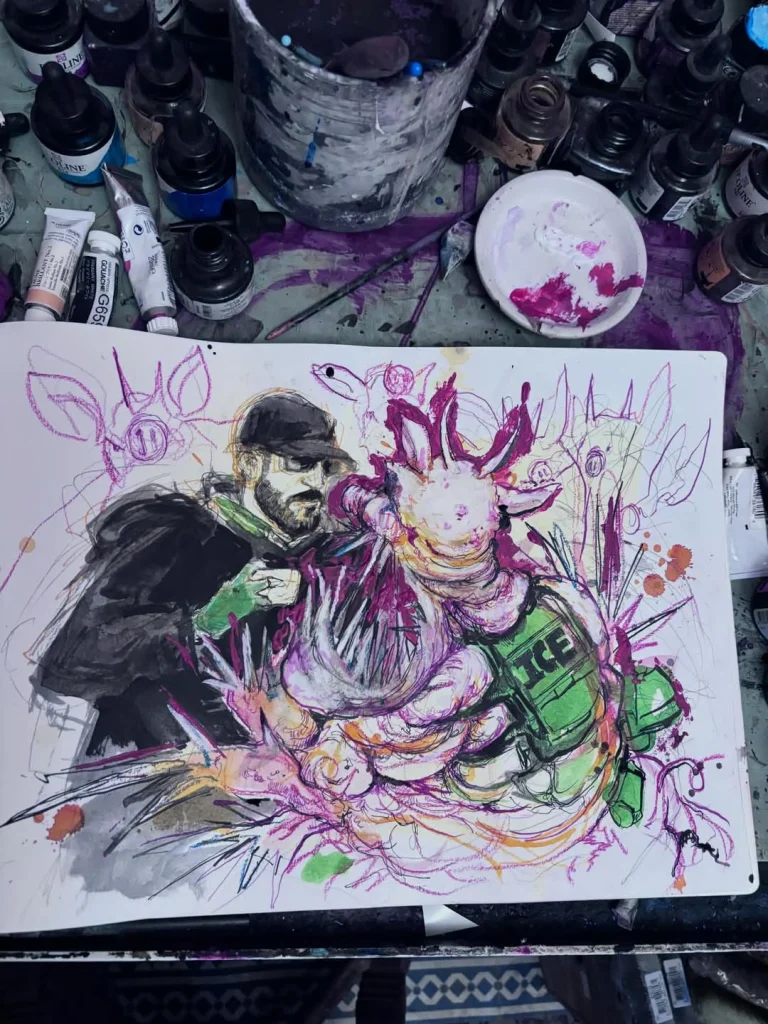

A newly unveiled portrait honoring Alex Jeffrey Pretti has become a powerful symbol of remembrance and protest in Minneapolis, capturing both the life he lived and the tragedy that ended it.
The portrait, created as a tribute by local artists and community members, depicts Pretti with a calm yet resolute expression.
Soft lighting surrounds his face, evoking the candlelight vigils held in his honor, while subtle details in the painting reference his work as an ICU nurse who cared for U.S. military veterans.
The artwork is intended not only to memorialize Pretti as a person, but also to preserve the meaning of his final moments.
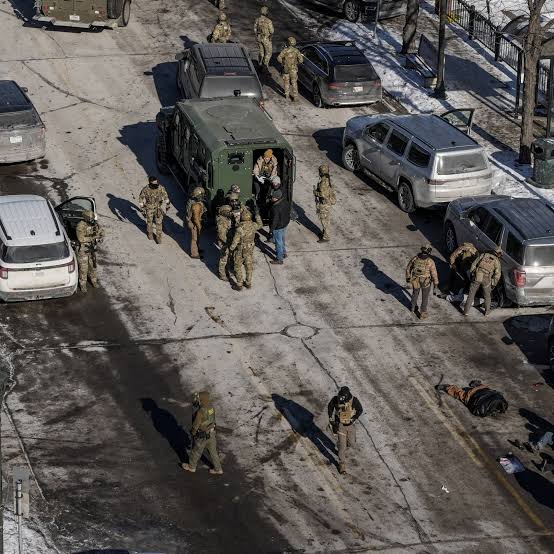
Pretti, 37, was fatally shot by federal immigration agents during a street operation in Minneapolis.
According to witness accounts and video footage, he was recording officers as they used pepper spray against a woman in the street.
Moments later, one of the agents confronted him and pushed him away from the roadway.
Several officers then forced him to the ground and began striking him. Despite being unarmed, an agent fired at him at close range, followed by additional shots. The incident was captured in videos later shared widely online.
Family members and witnesses have stated that Pretti never posed a threat and did not attempt to use a weapon.
His parents later said he was holding his phone in one hand while raising the other in an attempt to shield the woman who had been sprayed moments earlier. His death sparked immediate outrage in the community and across the country.
Since the portrait’s unveiling, it has been displayed at memorial gatherings near the site where Pretti was killed.
Flowers, candles, and handwritten messages surround the artwork as residents pause to reflect.
Many say the portrait humanizes a tragedy that might otherwise be reduced to headlines, reminding viewers that Pretti was a son, a caregiver, and a man who acted out of concern for someone else.
The tribute has also taken on broader meaning amid ongoing protests against aggressive immigration enforcement.
Demonstrators have described the portrait as a visual reminder of accountability and justice, as well as a symbol of solidarity with immigrants and marginalized communities.
For those who knew him and those who have learned his story since, the portrait of Alex Jeffrey Pretti stands as more than art.
It is a statement — of grief, of resistance, and of a life remembered not for how it ended, but for the courage shown in its final moments.